Wong Teasers Explained: Why Six-Point NFL Teasers Only Work Through 3 and 7
A six-point teaser at -120 needs each leg to win about 74 percent of the time. Here is the arithmetic, and why only legs crossing both 3 and 7 get there.
Gamble Verdict desk·· 7 min read
A two-team, six-point NFL teaser priced at -120 wins only if both legs cover, so each leg has to cover about 73.9 percent of the time just to break even. Most teased sides never get there. The "Wong teaser" is the small group of legs where six points carry the line across both 3 and 7, the two margins NFL games land on most often, and that is the only place the extra points are worth what the price takes back.
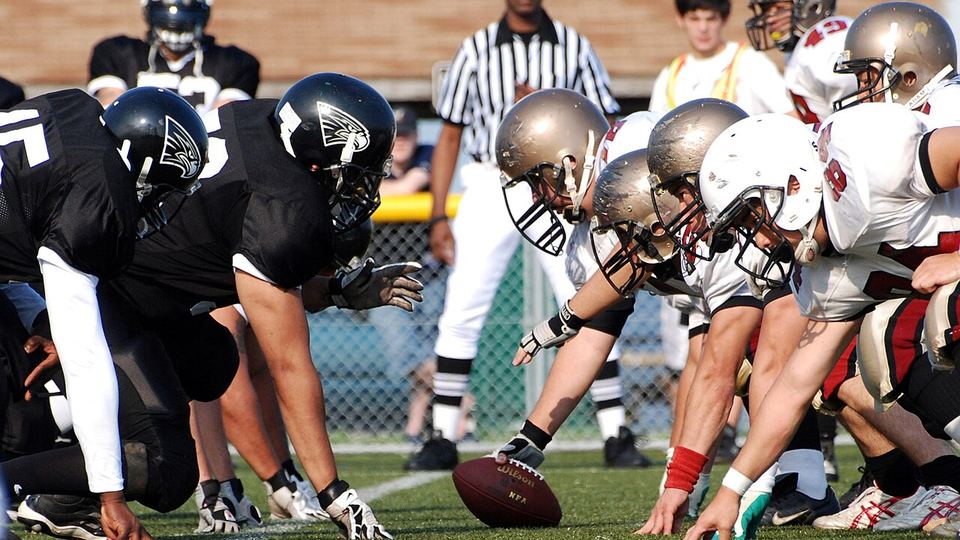

What a teaser buys, and what the price takes back
A teaser is a parlay in which the bettor moves every point spread (or total) in their own favor by a fixed number of points. In exchange, the payout is far below a normal parlay. In a standard football teaser the move is 6 points; books also post 6.5- and 7-point versions at worse prices.
Take two legs:
- An underdog at +2.5 becomes +8.5.
- A favorite at -8 becomes -2.
Both legs must win. If either loses, the ticket loses. What happens to a leg that pushes after the adjustment is set in each book's house rules, so it has to be checked on the card itself rather than assumed.
A teaser has no edge built in either way. The six points help the bettor. The reduced payout helps the book. Whether the trade is good depends on how much each six-point shift raises the chance of covering, and that depends on where the line starts. The name comes from Stanford Wong, whose book Sharp Sports Betting analyzes teasers alongside parlays and props and is the usual source cited for teasing only spreads that cross the key numbers.
The break-even arithmetic: square roots and cube roots
Every American price converts to a break-even probability for the whole ticket:
- For a negative price -X, the ticket breaks even at X / (X + 100).
- For a positive price +Y, the ticket breaks even at 100 / (Y + 100).
A teaser ticket only wins when every leg wins. If the legs are treated as independent and equally likely to cover, the ticket's win probability is the per-leg probability raised to the number of legs. Working backwards, the per-leg break-even is:
- two legs: the square root of the ticket break-even;
- three legs: the cube root of the ticket break-even.
For a two-team teaser at -120: 120 / 220 = 0.5455. The square root of 0.5455 is 0.7385. Each leg has to cover 73.9 percent of the time.
For a three-team teaser at +160: 100 / 260 = 0.3846. The cube root of 0.3846 is 0.7272. Each leg has to cover 72.7 percent of the time.
The prices below are illustrative inputs for the formula, not quotes from any particular sportsbook. Teaser cards differ from book to book and change, so the useful habit is to run the posted price through the same two steps.
| Teaser | Price | Ticket break-even | Per-leg break-even |
|---|---|---|---|
| 2 teams, 6 points | -110 | 110 / 210 = 52.38% | √0.5238 = 72.4% |
| 2 teams, 6 points | -120 | 120 / 220 = 54.55% | √0.5455 = 73.9% |
| 2 teams, 6 points | -130 | 130 / 230 = 56.52% | √0.5652 = 75.2% |
| 3 teams, 6 points | +140 | 100 / 240 = 41.67% | ∛0.4167 = 74.7% |
| 3 teams, 6 points | +160 | 100 / 260 = 38.46% | ∛0.3846 = 72.7% |
| 3 teams, 6 points | +180 | 100 / 280 = 35.71% | ∛0.3571 = 70.9% |
Two things stand out. First, every row asks each leg to win roughly 71 to 75 percent of the time, which is a very high bar for a bet built from point spreads that are set to be close to 50-50. Second, ten cents on a two-team price is not small. Moving from -110 to -120 raises the per-leg hurdle by about 1.5 percentage points, and moving to -130 raises it by almost 3. A leg that clears the bar at one price can fall short at another.
The independence assumption is a simplification. If two legs are correlated (for example, two sides in the same game), the square-root shortcut no longer describes the ticket, and house rules may refuse such combinations.
Why 3 and 7 decide whether a leg is worth teasing
Six points are not worth the same amount everywhere on the number line. What matters is how many final margins the move adds to the winning side. In the NFL, scoring comes mainly in 3-point field goals and 7-point touchdowns with the extra point, so final margins of 3 and 7 occur far more often than their neighbors. A six-point move that adds both of those margins captures much more probability than one that adds, say, 4, 5, 6, 8, 9 and 10.
Work out which starting spreads let six points cross both:
- Underdogs. A dog at +1.5 becomes +7.5. Before the tease, it lost any game decided by 2 or more points. After the tease, it also wins every loss by 2, 3, 4, 5, 6 or 7. Both 3 and 7 are now inside. The same is true for +2 (to +8) and +2.5 (to +8.5). At +3, the dog already had a push on 3, so the tease adds less. At +1, the tease reaches only +7, which turns a loss by 7 into a push rather than a win.
- Favorites. A favorite at -7.5 becomes -1.5. Before, it needed to win by 8 or more. After, it needs to win by 2 or more, so wins by 3 and by 7 both move from losses to wins. The same holds for -8 (to -2) and -8.5 (to -2.5). At -9, the tease lands at -3, so a 3-point win becomes a push.
That gives the two windows usually described as Wong teaser territory: underdogs from +1.5 to +2.5 and favorites from -7.5 to -8.5. They are not arbitrary. They are the only starting spreads where a six-point move begins on one side of 3 and 7 and ends on the other side of both.
Outside those windows, the arithmetic turns against the bettor. Teasing a 4-point favorite to +2 crosses 3 and 0 but nowhere near 7. Teasing a 10-point favorite to -4 crosses 7 but not 3. Each such leg still gets six points, but the six points capture only one key margin, and the per-leg win rate tends to fall short of the 72 to 75 percent the table requires.
This article does not quote a percentage for how often NFL games land on 3 or 7, because the rate varies by season, rule changes and sample, and any figure has to be tied to a named data set. The direction of the argument does not depend on the exact rate: the more weight 3 and 7 carry relative to other margins, the more a crossing leg is worth.
Where the edge leaks: totals, other sports and worse prices
Totals. A six-point tease of an NFL total moves the line across a range of combined scores. Combined scores do not pile up on one or two values the way margins pile up on 3 and 7, because both teams' scores add together and the possible sums spread out. Six points on a total therefore buy a smaller and less concentrated slice of probability, which is why teasing totals is not part of the Wong idea.
Basketball. Basketball teasers use smaller point moves than football teasers, and basketball margins do not cluster on a few key values because points arrive in many small increments over many possessions. Without a pair of heavy key numbers to cross, a basketball teaser leg has to win on general line movement, and the per-leg hurdle from the table above is just as high.
College football. The same scoring units exist, so 3 and 7 still matter, but margins are spread over a wider range because the gaps between teams are larger. Each key number carries less weight in the overall distribution, so a crossing leg gains less than the same leg in the NFL.
Bigger moves at worse prices. Books also sell 6.5- and 7-point teasers. The extra half-point or point helps only if it adds a heavily weighted margin, and the price for it raises the per-leg hurdle. Run the price through the formula first and then count which additional margins the extra half-point actually captures.
Line moves. A dog that opens at +2.5 and moves to +3 is no longer inside the window. A favorite that moves from -8.5 to -9 is no longer either. The window is defined by the number on the ticket, not by the number at the open.
A short checklist before writing a teaser ticket
- Convert the price. Turn the posted teaser price into a ticket break-even with X / (X + 100) or 100 / (Y + 100).
- Take the root. Square root for two legs, cube root for three. That is the cover rate each leg needs.
- Check the window. For a six-point football teaser, keep only underdogs at +1.5 to +2.5 and favorites at -7.5 to -8.5 at the moment the ticket is written.
- Count the margins crossed. If the move does not carry the line across both 3 and 7, the leg is a standard teaser leg, not a Wong leg.
- Read the house rules. Find out how a pushed leg is graded and which combinations the book refuses, because both change the real price of the ticket.
- Leave totals and other sports out of the same reasoning. The key-number argument is specific to NFL point spreads.
The arithmetic does not say that any teaser wins. It says how high the bar is at a given price, and why only legs that cross both 3 and 7 have a structural reason to get over it.
General information on how games, odds and gambling rules work. It is not advice to place any bet, and rules, prices and limits change; check the operator’s or regulator’s own page before acting.