Triple-Zero Roulette: The Arithmetic Behind a 7.69 Percent House Edge
Adding a third zero leaves every payout unchanged and nearly triples the single-zero edge. Pocket-count arithmetic for 0, 00 and 000 wheels and the loss per $100 on each.
Gamble Verdict desk·· 6 min read
A triple-zero roulette wheel has 39 pockets (1 through 36, plus 0, 00 and 000) but pays the same 35 to 1 on a single number as a 37-pocket single-zero wheel. That mismatch gives the house an edge of 3/39, or 7.69 percent, on every standard bet, against 5.26 percent on a double-zero wheel and 2.70 percent on a single-zero wheel. The general rule is simple: house edge equals the number of zero pockets divided by the total number of pockets.

One formula for every wheel
Roulette payouts are set as if the wheel had 36 pockets. A straight-up bet on one number pays 35 to 1, so a winning $1 bet returns $36 including the stake. On a 36-pocket wheel with no zeros, that would be a fair bet: a 1-in-36 chance of receiving $36 for every $1 risked.
Every zero added to the wheel adds a pocket that the payout ignores. On a wheel with n pockets, the straight-up bet returns:
Expected return per $1 = (1/n) × $36 = 36/n
House edge = 1 − 36/n = (n − 36)/n
Since n − 36 is the number of zero pockets, the edge is zeros ÷ pockets.
Single zero (37 pockets). Edge = 1/37 = 0.027027, or 2.70 percent.
Double zero (38 pockets). Edge = 2/38 = 1/19 = 0.052632, or 5.26 percent.
Triple zero (39 pockets). Edge = 3/39 = 1/13 = 0.076923, or 7.69 percent.
Going from one zero to three nearly triples the edge (7.69 ÷ 2.70 = 2.85).
Why the payout table stays the same
The same calculation works for every standard inside and outside bet, because each one is priced as a fraction of 36 numbers. A bet covering k numbers pays (36/k − 1) to 1:
- Split (2 numbers): 17 to 1
- Street (3 numbers): 11 to 1
- Corner (4 numbers): 8 to 1
- Six line (6 numbers): 5 to 1
- Column or dozen (12 numbers): 2 to 1
- Red, black, odd, even, high, low (18 numbers): 1 to 1
On a wheel with n pockets, a bet on k numbers wins with probability k/n and returns 36/k per $1 when it wins. Expected return = (k/n) × (36/k) = 36/n. The k cancels, so every one of these bets has the same edge on a given wheel.
A check with an even-money bet on red on a triple-zero wheel: red wins on 18 pockets and loses on 21 (18 black plus 3 zeros). Per $1: (18 × 1 − 21 × 1) ÷ 39 = −3/39 = −7.69 percent. On a double-zero wheel the same bet gives (18 − 20) ÷ 38 = −2/38 = −5.26 percent.
This is why a wheel can gain a third zero without any change to the printed payouts. The payout table never accounted for zeros in the first place; it simply leaves more of them uncovered. The extra zero shows up only in the pocket count, which is easy to overlook at a busy table.
The five-number bet: the one exception
On a double-zero wheel, the layout offers a bet on 0, 00, 1, 2 and 3 together, often called the five-number bet or top line. It pays 6 to 1. Under the formula above, a five-number bet should pay 36/5 − 1 = 6.2 to 1 to match the other bets; rounding down to 6 to 1 makes it worse.
Per $1 on a 38-pocket wheel:
- Win: 5 pockets out of 38, returning $6 profit.
- Lose: 33 pockets out of 38, losing $1.
- Expected value = (5 × 6 − 33 × 1) ÷ 38 = (30 − 33) ÷ 38 = −3/38.
That is a house edge of 7.89 percent, higher than every other bet on the same wheel and slightly higher than the standard 7.69 percent edge on a triple-zero wheel. A player on a double-zero wheel who avoids this one bet faces 5.26 percent on everything else.
The same arithmetic can be applied to any special bet on a triple-zero layout: count the pockets covered, multiply by the payout plus one, divide by 39, and subtract 1. If the result is worse than −3/39, the bet carries more than the wheel's standard edge.
Expected loss per $100 and per hour
House edge converts directly into expected loss per amount wagered. Expected loss is an average over a very long series of spins; any single session can finish well above or below it.
The hourly figures below assume a $10 bet per spin and 40 spins an hour, a pace chosen to make the arithmetic easy to follow rather than a measured rate at any table. Faster or slower tables scale the hourly line proportionally.
| Wheel or bet | Pockets | House edge | Expected loss per $100 wagered | Wagered per hour ($10 × 40 spins) | Expected loss per hour |
|---|---|---|---|---|---|
| Single zero | 37 | 1/37 = 2.70% | $2.70 | $400 | $10.81 |
| Double zero | 38 | 2/38 = 5.26% | $5.26 | $400 | $21.05 |
| Five-number bet, double zero | 38 | 3/38 = 7.89% | $7.89 | $400 | $31.58 |
| Triple zero | 39 | 3/39 = 7.69% | $7.69 | $400 | $30.77 |
The arithmetic for each row is the edge times the amount wagered. For the triple-zero wheel over an hour: $400 × 3/39 = $1,200/39 = $30.77. Over a four-hour session at the same pace and stake, the triple-zero wheel's expected loss is $123.08, against $84.21 on a double-zero wheel and $43.24 on a single-zero wheel.
The same comparison works at any stake. A player making 100 even-money bets of $25 on red puts $2,500 in action. The expected loss is $2,500 × 1/37 = $67.57 on a single-zero wheel, $2,500 × 1/19 = $131.58 on a double-zero wheel and $2,500 × 1/13 = $192.31 on a triple-zero wheel. The third zero alone, compared with a double-zero wheel, adds $60.73 to the expected cost of those 100 spins. Put another way, the extra cost of the third zero per $100 wagered is $7.69 − $5.26 = $2.43, which is close to the entire house edge of a single-zero wheel.
Two points are easy to miss. First, the loss is per dollar wagered, not per dollar brought to the table. A player who buys in for $100 and keeps re-betting the same chips at $10 a spin wagers that $100 many times over. Second, splitting the money across several bets on the same spin does not change the edge, because every standard bet on a given wheel has the same edge. Spreading $10 across a dozen and a split still costs 7.69 percent of $10 per spin on a triple-zero wheel.
Common questions about the third zero
How can a player tell which wheel is in use?
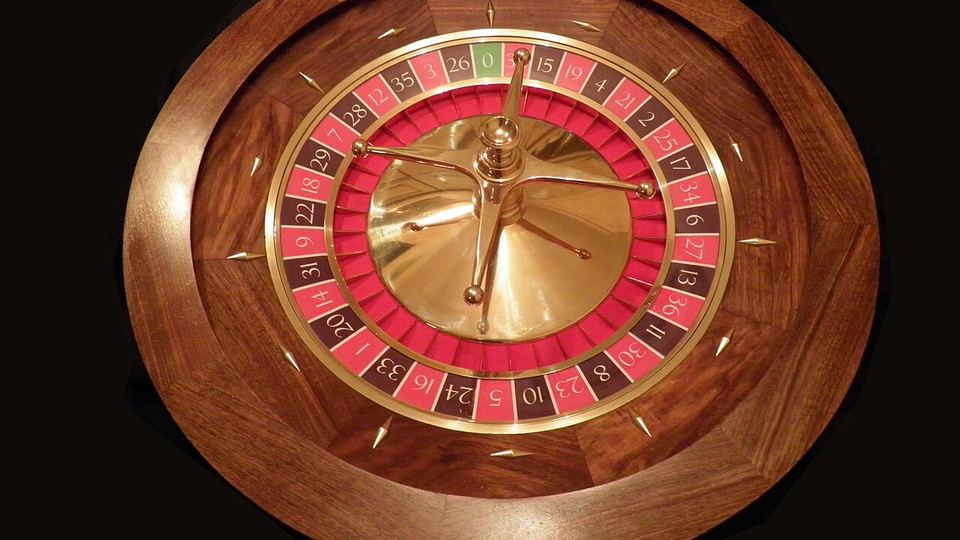
Count the green pockets on the wheel or the green spaces at the top of the layout. One green 0 means 37 pockets, 0 and 00 means 38, and 0, 00 and 000 means 39. The payout placard will not reveal it, since the payouts are identical on all three.
Does a triple-zero wheel ever give a better bet than a double-zero wheel?
Not among standard bets. Every standard bet on a 39-pocket wheel carries 7.69 percent, against 5.26 percent on a 38-pocket wheel. The only bet on a double-zero wheel that is worse than triple-zero's standard edge is the five-number bet at 7.89 percent.
Can the house edge be calculated for a wheel with a different pocket count?
Yes. For a wheel paying the standard 35 to 1 with z zero pockets and 36 numbers, the edge is z ÷ (36 + z). A hypothetical four-zero wheel with 40 pockets would carry 4/40 = 10 percent.
Does betting more numbers reduce the edge?
No. Covering more numbers raises the chance of winning a given spin, but the payout falls in exact proportion, as shown by the (k/n) × (36/k) = 36/n result above. The expected loss per dollar wagered stays at the wheel's edge regardless of how many numbers are covered.
Does a betting system get around the extra zero?
No system changes the expected value of any individual bet, and a series of negative-expectation bets has a negative total expectation. On a triple-zero wheel, any sequence of standard bets loses 7.69 percent of the total amount wagered on average, whatever the order or size of those bets.
General information on how games, odds and gambling rules work. It is not advice to place any bet, and rules, prices and limits change; check the operator’s or regulator’s own page before acting.